
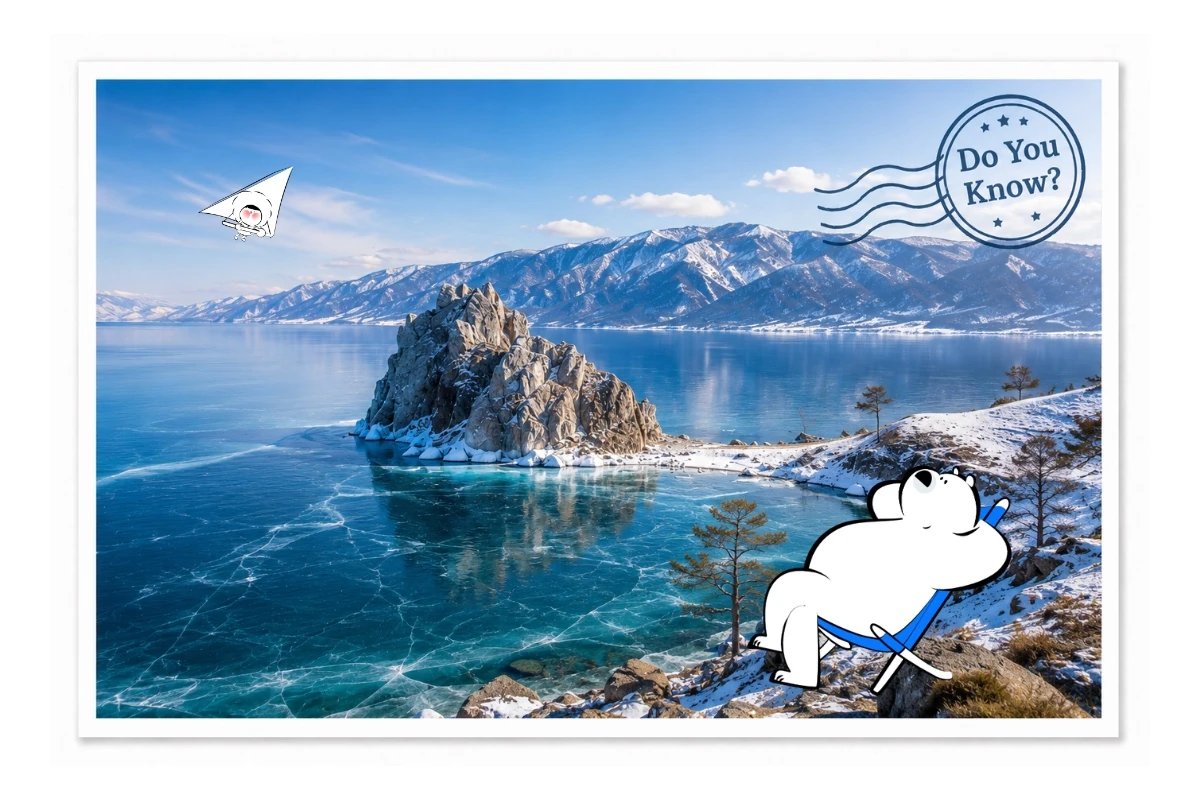
The deepest lake in the world is Lake Baikal in Siberia, Russia. It reaches 1,642 meters (5,387 feet) at its deepest point and contains about 20% of the world’s unfrozen freshwater, making it one of Earth’s most remarkable natural wonders.
The Deepest Lake In The World Is Lake Baikal
Lake Baikal lies in southern Siberia and has fascinated scientists and travelers for centuries. While many lakes are known for their size, Baikal stands out because of its extraordinary depth, crystal-clear water, and unique wildlife.
It is also recognized as the oldest lake in the world, estimated to be 25 to 30 million years old, far older than most lakes that formed after the last Ice Age.
Quick Facts
| Fact | Information |
| Name | Lake Baikal |
| Country | Russia |
| Maximum Depth | 1,642 m (5,387 ft) |
| Length | 636 km |
| Age | 25-30 Million years |
| UNESCO Status | World Heritage Site |
Get Eskimo eSIM to stay connected globally
Need internet while travelling? Here's what we recommend:

Fixed data plans
- No speed reduction
- No expiry, keep your data forever
- Transfer data to anyone
- Personal hotspot


Why Is Lake Baikal So Special?
Lake Baikal is much more than the deepest lake.
It is:
- The world’s deepest freshwater lake
- Home to around 3,500 species of plants and animals
- Home to the Baikal seal (Nerpa), the world’s only freshwater seal
- One of the clearest lakes on Earth, with visibility reaching around 40 meters in winter
Scientists consider Baikal one of the planet’s most important freshwater ecosystems because many of its species cannot be found anywhere else.
Where Is Lake Baikal?
Lake Baikal is located in southern Siberia, between Irkutsk Oblast and the Republic of Buryatia in Russia.
Popular places to visit include:
- Listvyanka
- Olkhon Island
- Circum-Baikal Railway
- Chivyrkuisky Bay
During winter, the lake freezes into spectacular transparent blue ice that attracts photographers from around the world.
Can You Visit Lake Baikal?
Yes. Lake Baikal is open to visitors throughout the year.
Summer is ideal for hiking, boat trips, and wildlife watching, while winter offers frozen-lake excursions, ice caves, skating, snowmobiling, and scenic train journeys.
If you’re planning a trip through Siberia, you may also enjoy riding the Trans-Siberian Railway, which passes close to Lake Baikal.
Planning A Trip To Lake Baikal
A journey to Lake Baikal often includes trains, domestic flights, offline maps, translation apps, and remote travel areas with limited Wi-Fi.
For Russia travel, Eskimo offers an eSIM without needing to swap physical SIM cards. New Eskimo users can also get free 500MB of Global Data, making it easy to stay connected while exploring one of the world’s most extraordinary lakes.
FAQ
What Is The Deepest Lake In The World?
The deepest lake in the world is Lake Baikal in Russia.
How Deep Is Lake Baikal?
Its maximum recorded depth is 1,642 meters (5,387 feet).
Is Lake Baikal The Largest Lake?
No. It is the deepest freshwater lake, but not the largest by surface area. Lake Superior is larger by area, while the Caspian Sea is the world’s largest inland body of water.
Why Is Lake Baikal Famous?
It is famous for being the deepest and oldest lake in the world, containing about 20% of Earth’s unfrozen freshwater, and for its unique wildlife, including the Baikal seal.
Can You Visit Lake Baikal In Winter?
Yes. Winter is one of the most popular seasons because the lake freezes into exceptionally clear blue ice, creating spectacular scenery and outdoor activities.